
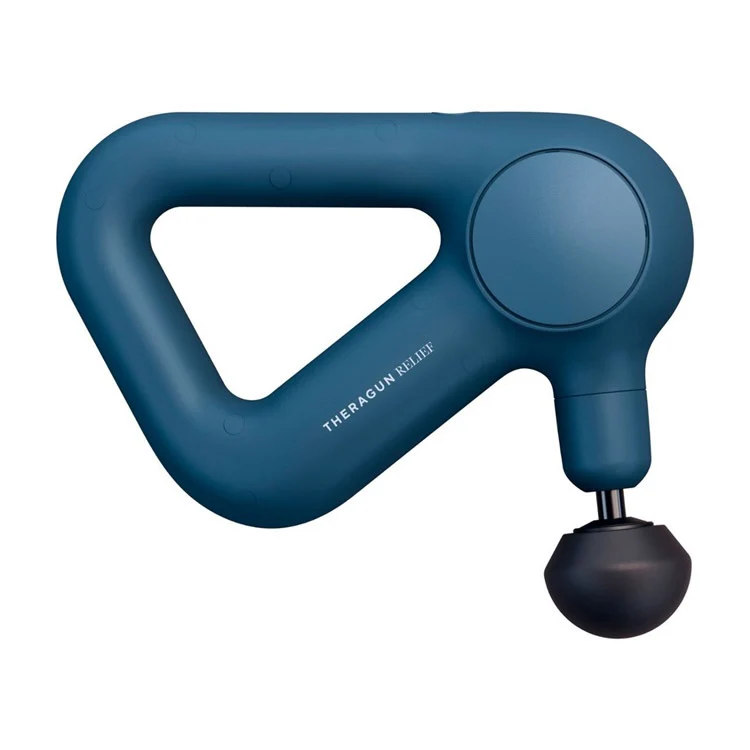
A stiff shoulder at 4:47 p.m. feels different from gym soreness. It is smaller, duller, and harder to explain, yet it can follow you into dinner, sleep, and the next morning’s first email. That is why Theragun Relief is getting attention from U.S. desk workers who want an easy recovery gift rather than another intense fitness gadget. The appeal is not about turning an office worker into an athlete. It is about giving tired neck-adjacent muscles, upper backs, forearms, and calves a short reset after long screen days. For readers tracking consumer wellness gear, this model sits in the sweet spot between cheap unknown massagers and premium devices that feel like too much machine for everyday tension. Recent retailer pages and sale coverage point to strong demand, familiar pricing around the $120 to $160 range, and a brief Prime Day dip reported near $100. Prices move, but the reason people are buying it is steady: desk bodies need relief that feels simple enough to use on a Tuesday night.
Why Theragun Relief Fits the Desk Pain Moment
Desk pain rarely arrives with drama. It builds from small choices: laptop too low, shoulders lifted during calls, wrists parked at a bad angle, and breaks pushed off until the calendar stops barking. The Mayo Clinic notes that proper office ergonomics can help reduce problems tied to seated work, including neck, back, wrist, and shoulder discomfort, which is why a device like this should be viewed as one part of a better routine, not the whole answer. A massage tool cannot fix a bad workstation. It can make the end of a bad workstation day feel less punishing. Mayo Clinic office ergonomics guide
The ache usually starts before you notice it
The weird thing about desk soreness is that it often feels like nothing while it is forming. You are answering Slack messages, leaning into a spreadsheet, or holding your phone between shoulder and ear for one short call that becomes twenty minutes. Then you stand up and feel the price.
That delayed awareness matters because the best recovery routine is the one you can start before the pain becomes the main event. A light session across the upper traps, shoulder blades, glutes, or forearms can feel more useful than waiting until the whole area locks down. Mayo Clinic’s massage gun overview says research is still developing, but percussive therapy may help with soreness, stiffness, and range of motion after activity. Desk work is not a workout, but it does keep certain muscles under low-level stress for hours.
This is where the desk story gets more honest. The device is not a cure for poor posture or a replacement for walking, stretching, sleep, or care from a clinician. It is closer to a nightly reset button. Small relief, repeated often, can beat a huge routine you never start.
Why gentler force can win for office bodies
A lot of massage gun marketing worships power. That makes sense for athletes with dense quads or lifters who want deeper pressure after training. Desk workers are different. Many want less intimidation, not more force.
Therabody describes this model as lightweight and made for aches, stiffness, tension, and everyday discomfort. Amazon’s listing also describes it as a comfortable, light personal massager for areas such as the neck, back, legs, shoulders, and body, while another listing calls it the brand’s gentlest level of percussive massage therapy with three speeds and one-button control. That matters for a shared household where one person wants shoulder relief after billing work and another wants calf relief after standing all day.
The non-obvious win is restraint. A milder device can invite better behavior because you are less likely to attack a sore spot like you are sanding a table. For desk tension, comfort and control may matter more than brute strength.
That also makes it easier to give. A high-force tool can feel impressive in a product video, then scare off the person who was supposed to use it. A calmer model may not win the spec-sheet argument, but it can win the living-room test. It gets picked up on an ordinary night.
What Makes a Percussion Massage Gun Worth Gifting
A gift should not create homework. That is the trap with many recovery gadgets. They arrive with apps, routines, complicated modes, and a feeling that the owner has to study before feeling better. A percussion massage gun works as a gift when the person can open the box, press one button, and understand the value before the battery is half drained.
The office gift category is full of polite misses. Mugs, planners, blue-light glasses, and novelty desk toys all say the same thing: someone needed an idea. A recovery tool says something warmer. It says the person has noticed how work lands in the body, not only on the calendar. That is why this device feels more personal than another charger or candle without becoming too intimate for a coworker, spouse, parent, or adult child.
One-button control matters when your shoulders are tired
After a long workday, decision fatigue is real. You have already picked meeting times, lunch, replies, approvals, and which task to ignore until tomorrow. A recovery device should not add another menu to your life.
This is where design has to respect mood. A tired user does not want to compare modes like they are setting up a router. They want to press, breathe, and feel the tight patch soften a little. Even a good product fails when the first use feels like setup.
That is why simple control is not a small feature. The official and retailer descriptions point to an easy daily-use design, with three speeds and a lighter feel than many serious gym-focused models. Best Buy’s listing shows strong customer response, including a 4.7-star rating from hundreds of reviews at the time checked, while Amazon’s listing showed a 4.6-star average and thousands bought in the past month. Retail ratings are not proof of medical value, but they do show that ordinary buyers are not treating this as a niche pro tool.
Here is the desk-worker test: can you use it while sitting on the edge of the bed without thinking hard? If yes, it has a chance to become part of a routine. If no, it becomes another expensive object in a drawer.
The price story is part of the gift story
The gift buzz also comes from timing. Esquire reported the model at about $100 during Amazon Prime Day 2026 and called that its lowest price ever, while Best Buy showed it discounted to $119.99 from a $159.99 comparable value when checked. Amazon’s own product page showed a $159.99 listing at the time returned in search. That spread tells buyers one thing: this is a product worth price-watching, not panic-buying without checking the cart.
For a birthday, Father’s Day, graduation, holiday gift, or office raffle, the price matters because the device feels nicer than a random $40 massager but less risky than a $300-plus recovery unit. That middle lane is powerful. It says, “I noticed your shoulders hurt,” without saying, “I bought you a medical-looking machine.”
A good gift has emotional timing. For many American desk workers, the timing is after another season of hybrid work, long commutes, laptop couches, and kitchen-table offices that were never built for eight-hour days. That is why home office comfort upgrades now sit near wellness purchases instead of office supply purchases.
How Desk Workers Should Use a Desk Worker Recovery Tool Safely
The biggest mistake with home recovery devices is treating relief like a contest. More pressure does not always mean better results. Longer sessions do not always mean deeper care. A desk worker recovery tool should help you calm irritated muscles, not turn a sore shoulder into a new problem.
Start around the shoulder, not on the neck
Neck discomfort is one of the reasons people shop for massage guns, but the neck is also where caution matters. Health and safety guidance often points people toward using massage guns on muscle areas and avoiding sensitive spots, bony areas, and the front or side of the neck. University of Utah Health advises using massage guns on sore muscles after workouts and waiting several days after an acute strain before using one for injury recovery, which is a useful reminder that pain type matters.
For desk workers, a safer pattern is to work around the problem area rather than hammer the most tender spot. Try the upper back, shoulder blade area, rear shoulder, forearm, glutes, or calves. Keep the head moving. Let the tool float.
The quiet rule is this: relief should feel like a release, not a dare. If you are wincing, backing away, or chasing numbness, stop. Persistent pain, tingling, weakness, headaches, or pain after an injury belongs with a qualified health professional, not a shopping cart.
Pair short sessions with better workstation habits
A massage gun can make you feel better after sitting badly, but it cannot make sitting badly harmless. That is the boring truth, and it is useful. The better plan is to pair short recovery sessions with small workstation fixes.
Start with the obvious items people skip. Raise the laptop with a stand or stack of books. Use an external keyboard when you can. Keep your mouse close enough that your shoulder does not creep forward all day. Set a timer that makes you stand before your back files a complaint.
Micro-breaks deserve more credit than they get. A thirty-second stand, a glass of water, or a slow walk to the mailbox can lower the amount of tension you are asking the tool to clean up later. That sounds too plain to sell, which is why it gets ignored. Plain fixes often carry the load.
Then use the device for a few minutes after work, not as punishment, but as a transition. This is where muscle tension relief becomes less like treatment and more like a boundary between job mode and home mode. You are telling your body the laptop portion of the day is over.
The counterintuitive part is that the massager may work best when you need it less. Better chair height, screen height, walking breaks, and sleep make each short session feel cleaner because you are not trying to erase eight hours of poor setup in one burst.
Who Should Buy It, Skip It, or Choose Something Stronger
No recovery tool is perfect for every body. That matters because the category is crowded with tiny budget models, stronger athlete-focused devices, heated heads, travel minis, and app-connected units. The right choice starts with the person, not the brand name.
Think about the buyer’s normal week before thinking about the box. A remote worker who ends the day with stiff shoulders needs something different from a marathon runner chasing deep quad work. A parent who shares it with the household needs simple controls. A traveler may care more about size than brand trust. Good buying starts with the boring details.
Best fit: stiff shoulders, light soreness, shared homes
This model makes the most sense for people who want a friendly daily-use massager, not a deep sports therapy machine. Think accountants in Dallas after tax season, remote designers in Portland working from a small apartment, nurses using it gently on calves after shifts, or parents who spend half the evening hunched over backpacks and dishes.
It also fits homes where several people will use the same device. One person may need light shoulder work after desk hours. Another may want calf massage after pickleball. Someone else may want low-speed muscle tension relief after yard work. A simple control setup keeps the tool from belonging to only the most fitness-obsessed person in the house.
The shared-home detail is easy to miss. A recovery device that feels too intense becomes one person’s gadget. A calmer one can live on the coffee table, near the charging basket, or beside the couch, where people reach for it before the ache grows teeth.
This is also why it works as a desk worker recovery tool. It does not ask the buyer to become a recovery expert. It asks them to notice tight areas earlier and treat them with a lighter hand.
When a cheaper or stronger option makes more sense
Some shoppers should skip it. If you want maximum power for large leg muscles after heavy lifting, you may prefer a stronger model with more speed range and deeper pressure. If your budget is tight and you only want occasional use, a cheaper massager may be enough. If you travel every week, a smaller mini device may fit your bag better.
There is also the medical line. If pain is sharp, spreading, linked to an accident, or paired with numbness or weakness, do not shop your way around it. A device can feel good and still be the wrong answer.
The smarter comparison is not “best massage gun.” It is “best fit for my real use.” For desk workers, that often means easy grip, mild-to-medium feel, clear controls, fair price, and enough trust that it will not be abandoned after one weekend. For broader gift planning, practical wellness gifts for work-from-home life can sit beside it, such as footrests, monitor risers, walking pads, heat wraps, and better desk chairs.
Conclusion
The office body has changed, even for people who never step into a traditional office. Work follows Americans from cubicles to kitchen counters, from rideshares to airport gates, and from morning email to late-night edits. That is why recovery tools are no longer only gym accessories. They are becoming part of the same comfort conversation as chairs, monitors, shoes, and sleep.
Theragun Relief fits that shift because it keeps the promise narrow. It offers simple, light, daily relief for people who carry work in their shoulders and upper backs. It will not fix a poor desk setup, and it should not be used as a medical shortcut. Still, when paired with movement, better ergonomics, and common sense, it can become the gift that gets used after the novelty fades.
The best recovery purchase is not the loudest one. It is the one that meets a tired person at the end of an ordinary day and makes tomorrow feel easier. Check the current price, compare retailers, and buy it for the desk worker who keeps saying they are fine when their shoulders say otherwise.
Frequently Asked Questions
Is this massage gun worth it for desk workers?
Yes, it can be worth it for desk workers who deal with mild shoulder, back, forearm, or calf tension after long seated days. It works best as part of a routine that also includes movement breaks, better screen height, and safer posture.
How often should an office worker use a recovery massager?
A few short sessions per week may be enough for many people. Daily use can make sense when pressure stays gentle and the muscles feel better afterward. Stop if soreness increases, skin bruises, or pain feels sharp instead of tight.
Can I use a massage gun while working at my desk?
It is better to use it during a break or after work. Using it while typing or joining calls can make you rush, press too hard, or ignore how the muscle feels. A focused two-minute break beats distracted use.
Is a percussion massager safe for neck pain?
Avoid using it on the front or side of the neck. For neck-related tension, work gently around the upper back and shoulder muscles instead. Any pain with numbness, dizziness, headaches, weakness, or injury history should be checked by a clinician.
What areas should desk workers target first?
Start with the upper back, shoulder blade area, rear shoulders, forearms, glutes, and calves. These areas often carry stress from sitting, typing, and poor chair position. Keep pressure light and move the device slowly over muscle, not bone.
Does a massage gun replace stretching or ergonomics?
No. It may help ease soreness, but it cannot replace movement, better desk setup, sleep, strength work, or medical care when needed. Think of it as support after the workday, not permission to ignore posture for eight hours.
What price is good for this kind of recovery gift?
For a branded daily-use model, a sale near the lower end of its recent retail range is a strong buy. Check more than one retailer before ordering because discounts can change fast, and color options may sell out during major sale events.
Who should not use a massage gun without advice?
People with recent injuries, blood clot risk, nerve symptoms, severe pain, certain medical conditions, or unexplained swelling should ask a healthcare professional first. Avoid bruised skin, open wounds, bony spots, and areas where sensation is reduced.